
If you’re trying to create a concrete wall look, the biggest mistake I see is jumping straight into materials without deciding the style direction first. That’s how people end up with something that feels “off”—too rough for a clean space, or too polished for a raw, edgy room.
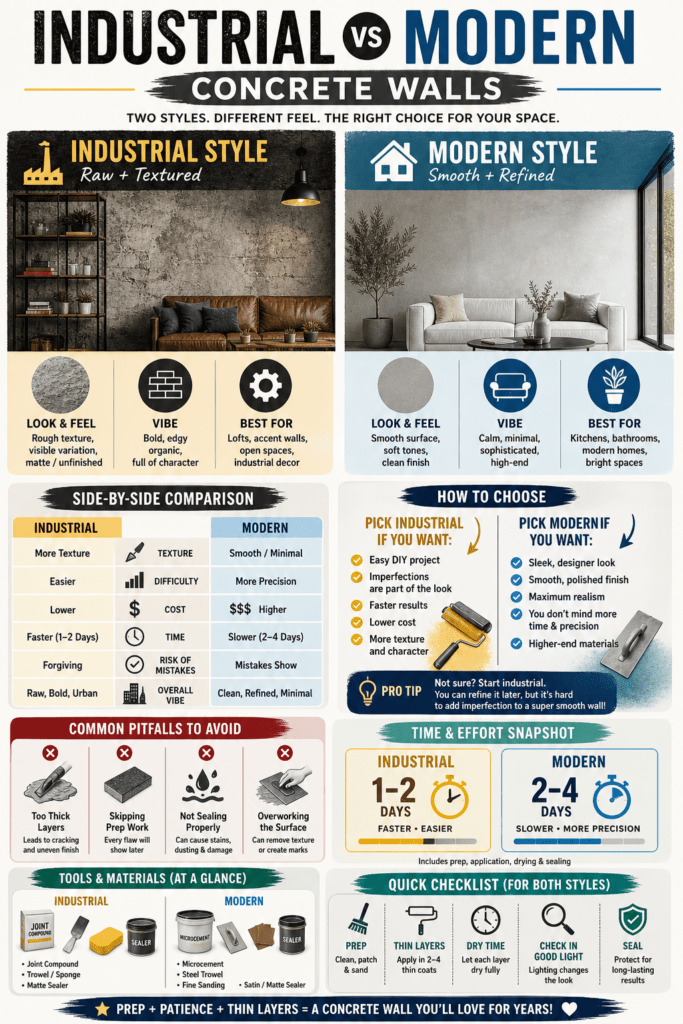
The difference between industrial and modern concrete walls isn’t subtle. It affects everything—your prep work, your tools, your time investment, and even how forgiving the finish is if things go wrong.
Let’s break it down clearly so you can choose once and get it right.
Industrial Concrete Walls: Raw, Textured, Imperfect
Industrial concrete walls are meant to look unfinished on purpose. Think warehouses, lofts, or exposed structural concrete.

What defines the industrial look:
- Visible texture and variation
- Uneven coloration (light/dark patches)
- Trowel marks, voids, or “imperfections”
- Matte or slightly chalky finish
Where it works best:
- Accent walls
- Large open rooms
- Spaces with metal, wood, or black accents
Materials that work well:
- Joint compound (budget-friendly and forgiving)
- Skim coat mixes
- Concrete overlays
👉 For a full material breakdown, see:
https://www.concretewalldesigns.com/best-faux-concrete-wall-materials/
Modern Concrete Walls: Smooth, Refined, Controlled
Modern concrete is the opposite approach—it’s about precision and subtlety.
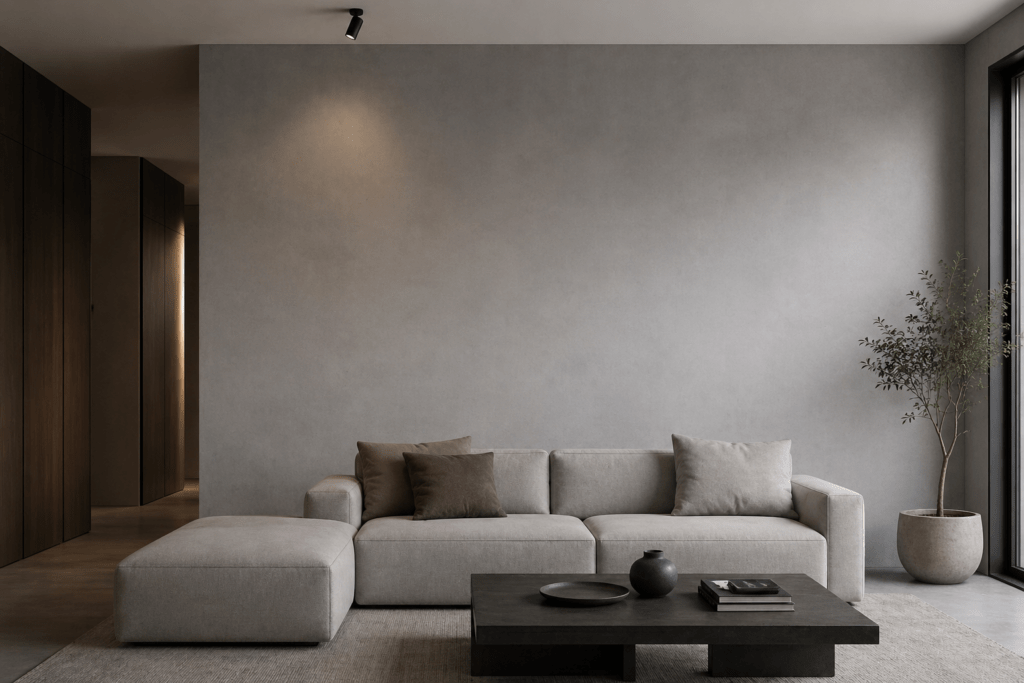
What defines the modern look:
- Smooth or lightly polished surface
- Minimal texture
- Soft, consistent color tones
- Clean edges and transitions
Where it works best:
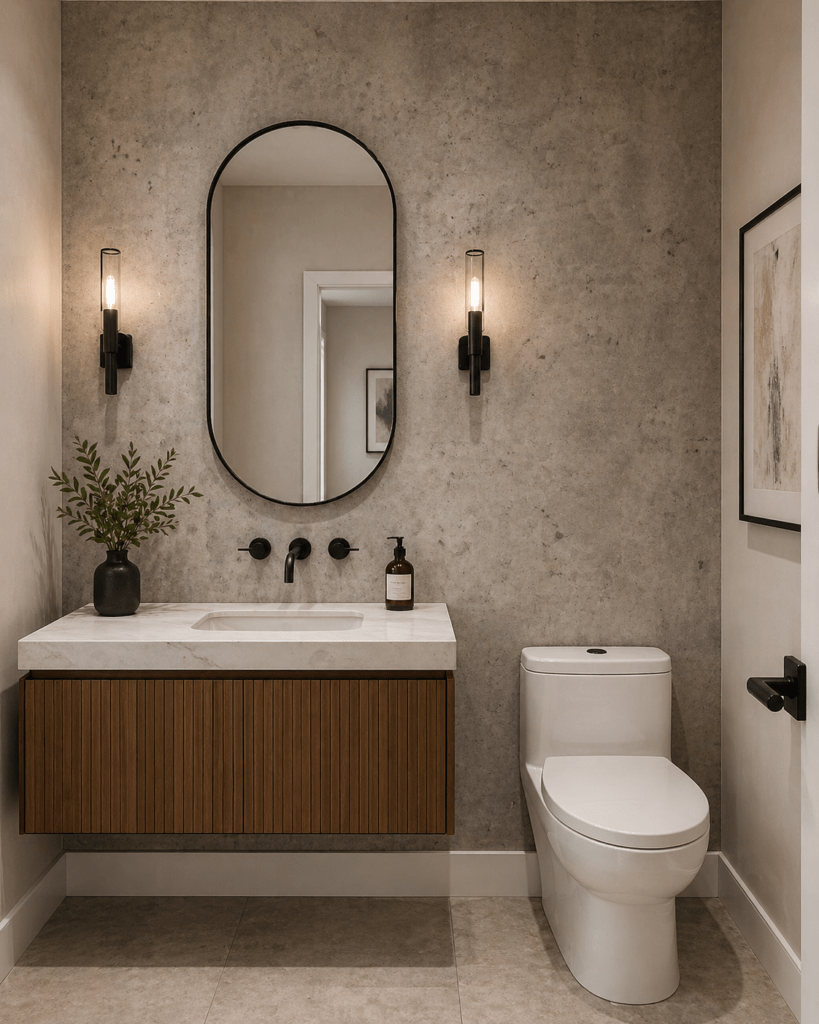
- Kitchens and bathrooms
- Living rooms with minimalist design
- Spaces with lots of natural light
Materials that work best:
- Microcement
- Venetian plaster (concrete-style finishes)
- High-end skim coats
👉 If you’re aiming for a smoother look, this guide helps:
https://www.concretewalldesigns.com/smooth-vs-textured-concrete-finish/
Side-by-Side Comparison
| Feature | Industrial | Modern |
|---|---|---|
| Texture | Heavy / visible | Minimal / smooth |
| Difficulty | Easier (forgiving) | Harder (precision needed) |
| Cost | Lower | Higher |
| Time | Faster | Slower |
| Risk of mistakes | Low | High (mistakes show) |
| Overall vibe | Raw, bold | Clean, refined |
Decision Guidance: Which Should You Choose?
Here’s the practical way to decide:
Go Industrial if:
- You want a forgiving DIY project
- Your walls aren’t perfectly smooth
- You like variation and character
- You want faster results
Go Modern if:
- You want a high-end, designer look
- You’re okay spending more time and money
- Your wall prep is excellent
- You’re confident in precision application
If you’re on the fence, start industrial. You can always refine it later—but it’s hard to add “natural imperfection” once you’ve gone too clean.
Trade-Offs and Risks (What Most People Overlook)
Industrial Risks:
- Can look messy instead of intentional
- Too much texture can overwhelm small rooms
- Poor sealing can lead to dusting or stains
Modern Risks:
- Every flaw shows (especially under lighting)
- Requires near-perfect prep work
- More expensive materials and tools
- Takes longer to get right
👉 Proper prep is critical either way:
https://www.concretewalldesigns.com/faux-concrete-wall-prep/
Realistic Expectations
This is where people get tripped up.
- Industrial finishes won’t look like poured concrete—they’ll look like a stylized version of it
- Modern finishes can look extremely real—but only if applied in multiple thin, controlled layers
- Lighting plays a huge role—what looks subtle in the daytime may look dramatic at night
Expect:
- 2–4 coats minimum
- Dry time between layers
- Some trial and error on your first wall
Time to Complete
| Style | Estimated Time |
|---|---|
| Industrial | 1–2 days |
| Modern | 2–4 days |
(Includes prep, application, and sealing)
Step-by-Step Overview (Both Styles)
Industrial (Simplified Process):
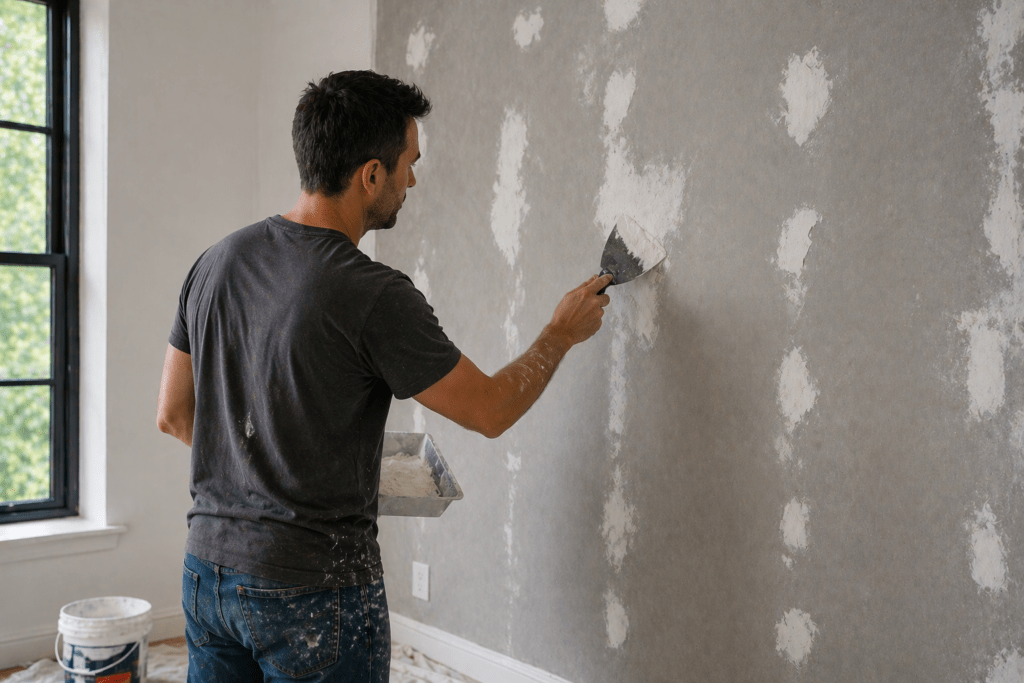
- Prep wall (clean + light sanding)
- Apply base coat (joint compound or skim coat)
- Add texture with trowel or sponge
- Layer color variation
- Seal with matte finish
Modern (Refined Process):
- Perfect wall prep (patch + sand smooth)
- Apply thin microcement layer
- Sand lightly
- Repeat 2–3 thin layers
- Burnish or smooth
- Seal with satin or matte finish
👉 For full tutorial: Faux Concrete DIY Step by Step
Printable Checklist

Industrial Wall Checklist
- ☐ Joint compound or skim coat
- ☐ Trowel + sponge
- ☐ Sandpaper (medium grit)
- ☐ Gray/charcoal tint or paint
- ☐ Matte sealer
Modern Wall Checklist
- ☐ Microcement or fine skim coat
- ☐ Steel trowel
- ☐ Fine sandpaper
- ☐ Mixing tools
- ☐ Satin/matte sealer
Frequently Asked Questions
Can I start industrial and convert to modern later?
Yes—but it requires sanding down texture and reapplying thin layers. It’s doable but adds time.
Which finish looks more like real concrete?
Modern finishes are more realistic at close range. Industrial looks more artistic and stylized.
Is sealing required?
Absolutely. Without sealing, both styles can stain, absorb moisture, or wear unevenly.
What’s the biggest beginner mistake?
Going too thick on the first coat. Thin layers always win—especially for modern finishes.
Product Recommendations
- Budget-friendly industrial option: Joint compound (easy to work with)
- Mid-range option: Skim coat mix for better durability
- High-end modern option: Microcement kits
👉 Explore detailed product comparisons:
https://www.concretewalldesigns.com/faux-concrete-vs-microcement/
Conclusion: Pick the Style That Matches Your Tolerance, Not Just Your Taste
Most people choose based on photos—but the smarter move is choosing based on how much precision you’re willing to handle.
- Industrial gives you flexibility and character
- Modern gives you polish and realism
If you want something that looks great without stress, go industrial. If you want that clean, high-end finish and don’t mind putting in the work, modern is worth it.
Either way, the finish only looks as good as the process behind it—so slow down, layer properly, and don’t rush the drying time. That’s where the real difference shows.