Creating a faux concrete wall that actually looks real comes down to one thing: choosing the right material for the look, skill level, and durability you need. I’ve seen people chase that “industrial concrete” vibe with the wrong product and end up with something that looks like painted drywall. The material choice is where most projects either win or fail.
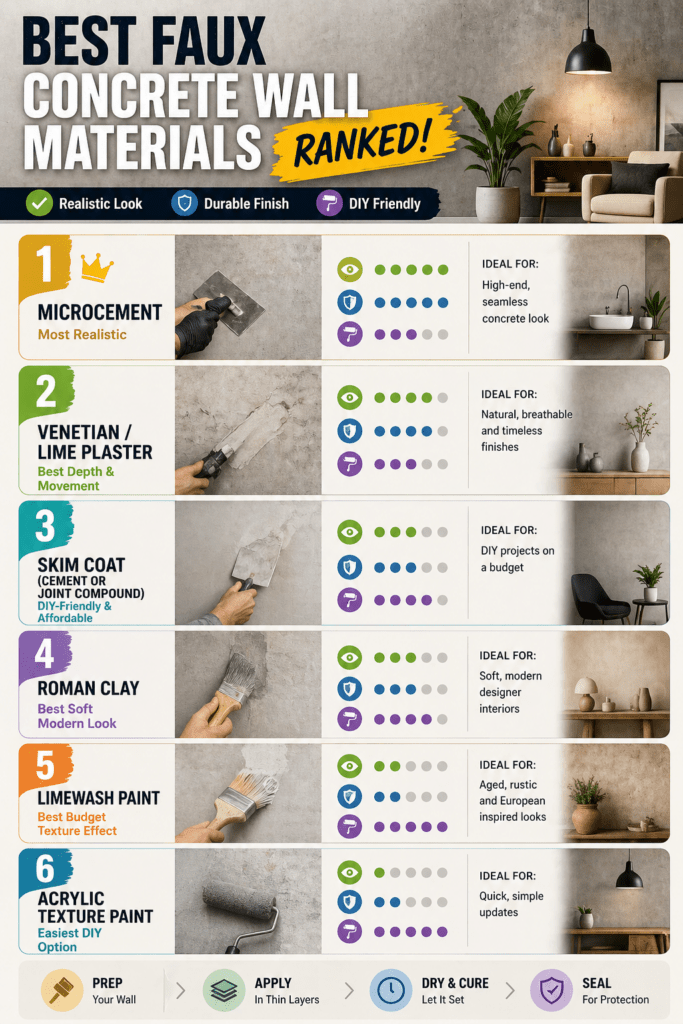
Below is a ranked breakdown of the best materials for faux concrete walls—based on realism, ease of use, durability, and cost—plus how I’d personally decide between them depending on the situation.
1. Microcement (Most Realistic Overall)
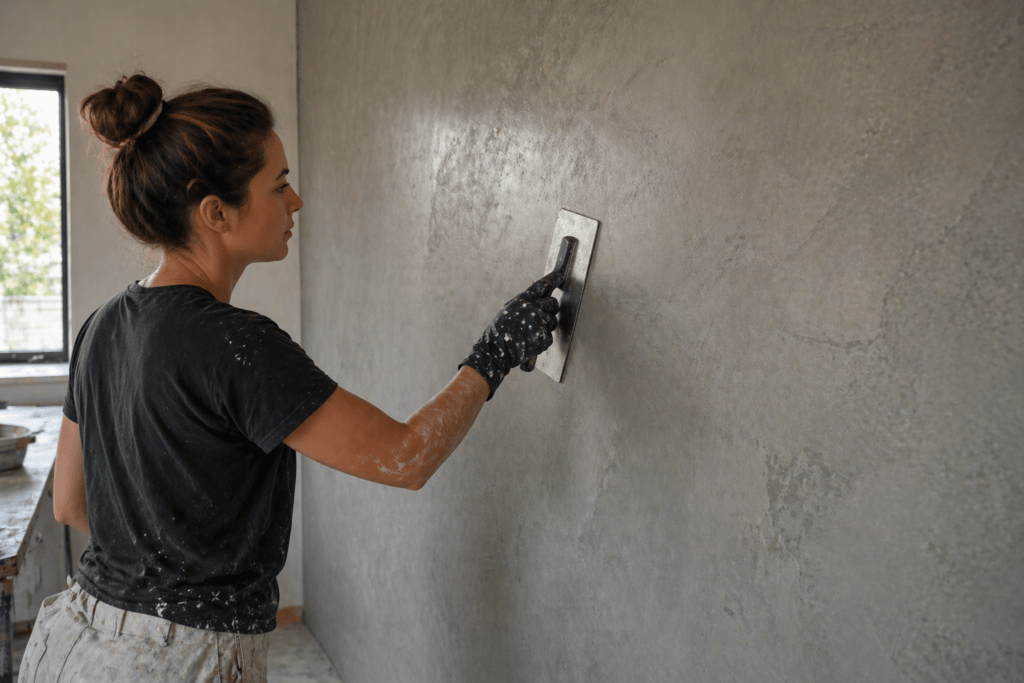
Why it ranks #1: If your goal is indistinguishable from real concrete, microcement is the closest you’ll get.
Microcement is a thin cement-based coating applied in multiple layers and burnished for depth. It creates that soft, cloudy movement you see in real concrete pours.
Pros
- Extremely realistic depth and variation
- Seamless (no joints or panel lines)
- Works on walls, floors, even showers
- Highly durable when sealed
Cons
- Steep learning curve
- More expensive than other options
- Requires careful prep and layering
Realistic expectation:
This is not a one-coat project. Expect 2–4 layers and careful sanding between passes.
Time to complete:
2–4 days (including drying + sealing)
👉 See layering techniques here
2. Venetian Plaster / Lime Plaster (Best Depth + Movement)
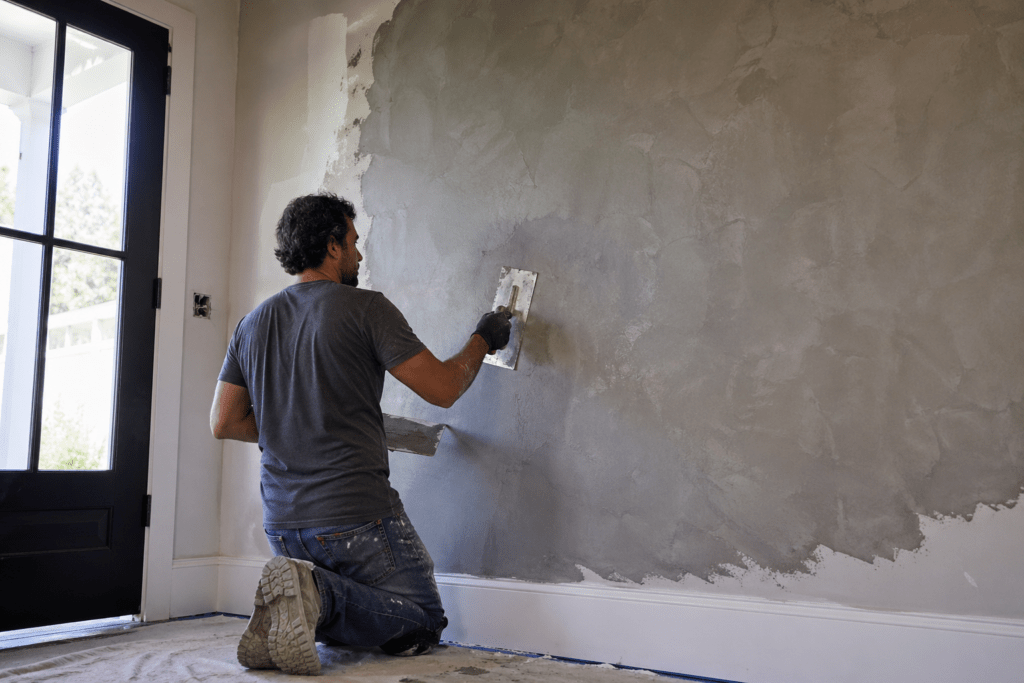
Why it’s top-tier: Lime-based plasters create a natural mineral finish that develops depth over time through carbonation.
This is the material behind high-end “polished concrete” style walls.
Pros
- Natural, breathable finish
- Soft, velvety depth
- Resistant to cracking vs cement
- Can be matte or polished
Cons
- Slower curing time
- Requires technique (trowel control matters)
- Can be caustic during application
Realistic expectation:
You won’t get uniform color—and that’s a good thing. Slight variation is what makes it look real.
Time to complete:
2–3 days (longer if using traditional lime)
👉 Faux Concrete Wall Prep Instructions
3. Skim Coat (Cement or Joint Compound)
Why it’s popular: Joint compound is the go-to DIY method for a concrete look without specialized materials.
You’re essentially applying a thin “mud” layer and manipulating it for texture.
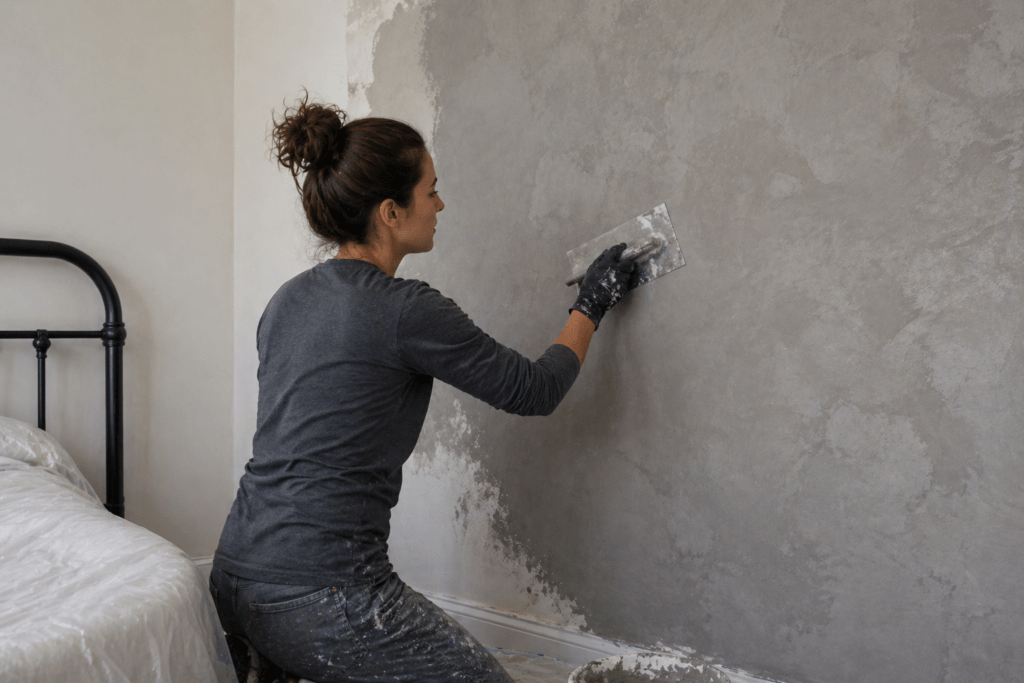
Pros
- Affordable
- Beginner-friendly
- Easy to sand and adjust
- Works over drywall
Cons
- Less durable than microcement
- Can look flat if not layered correctly
- Needs sealing
Realistic expectation:
Most people apply it too thick or too smooth. Thin, uneven passes create realism.
Time to complete:
1–2 days
4. Roman Clay (Best Soft Modern Look)
Roman clay is a newer designer favorite—it’s somewhere between plaster and paint, giving a soft, suede-like concrete feel.
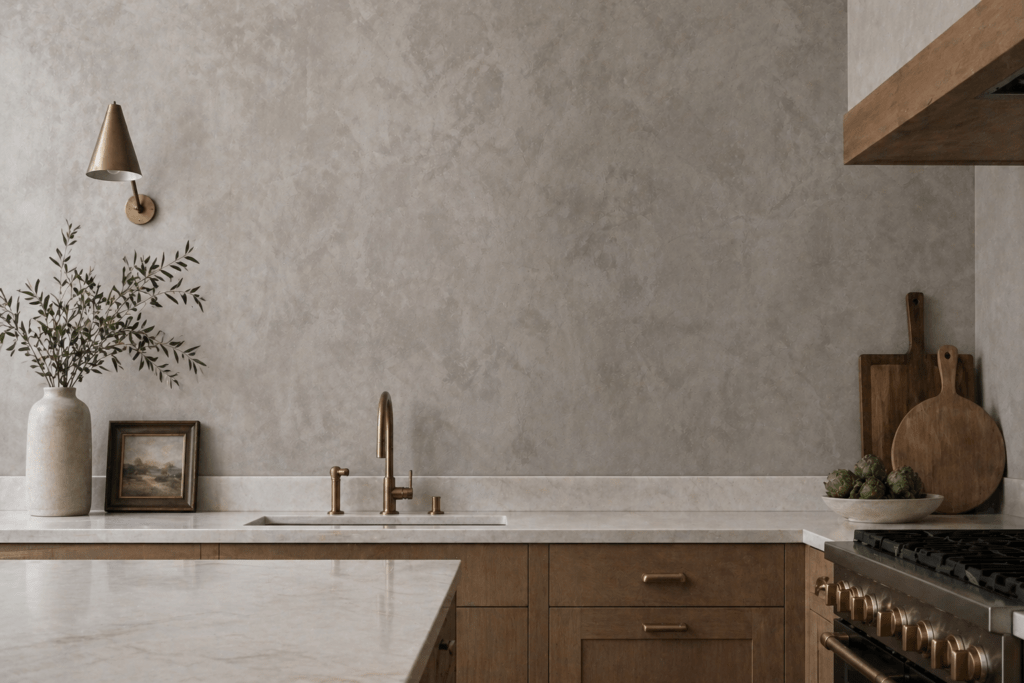
Pros
- Easy to apply compared to plaster
- Subtle, refined finish
- Great for modern interiors
Cons
- Less rugged than true concrete look
- Limited heavy texture options
Realistic expectation:
This leans more “designer concrete” than raw industrial.
Time to complete:
1–2 days
5. Limewash Paint (Best Budget Texture Effect)
Limewash gives a chalky, aged texture that mimics weathered concrete. It’s breathable and naturally mold-resistant.
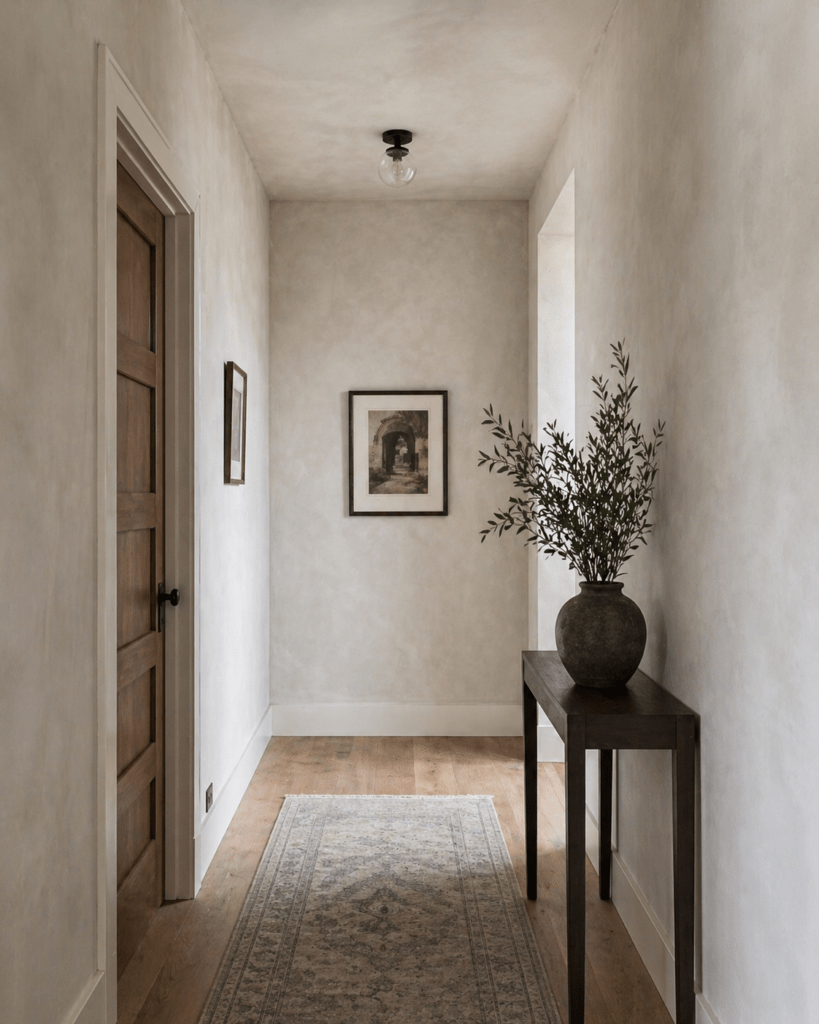
Pros
- Easy DIY
- Low cost
- Beautiful patina
Cons
- Limited durability
- Hard to clean
- Less control over final color
Realistic expectation:
Think “aged European wall,” not raw concrete slab.
Time to complete:
1 day
6. Acrylic Texture Paint (Easiest DIY Option)
These are pre-mixed coatings with aggregates or texture additives.
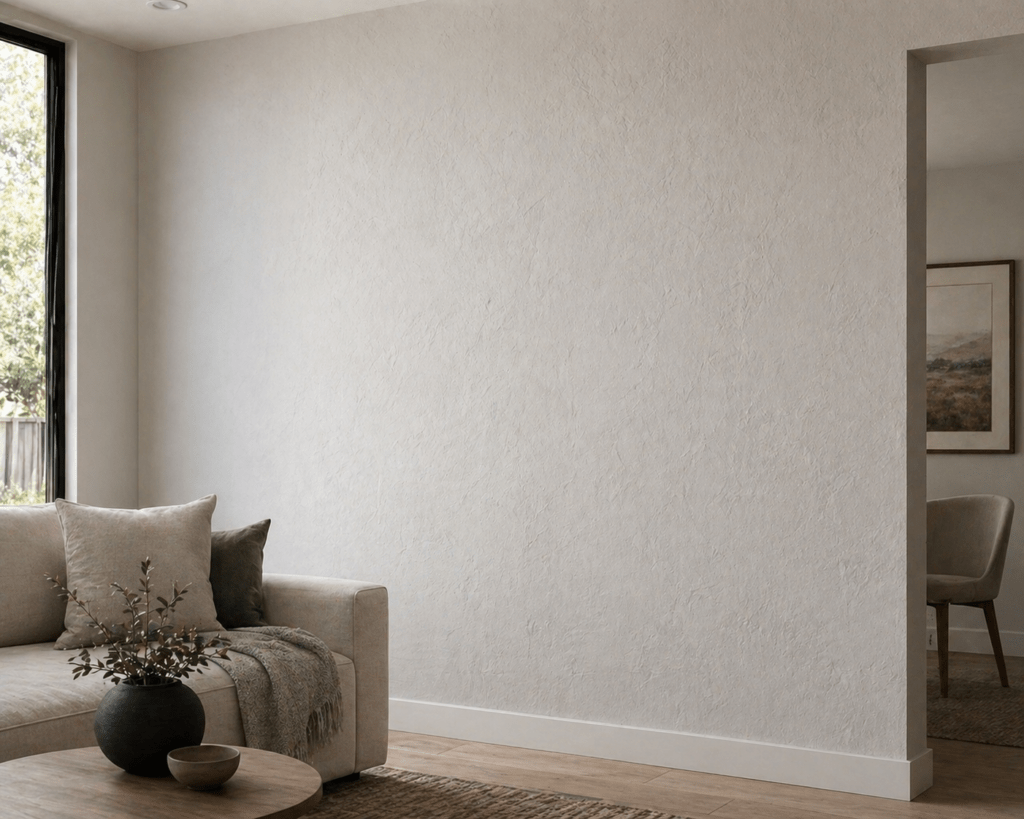
Pros
- Fast and simple
- Low skill required
- Good for large areas
Cons
- Least realistic
- Can look repetitive
- Limited depth
Realistic expectation:
Good from a distance—but up close, it rarely passes as real concrete.
Time to complete:
1 day
How to Choose the Right Material
Here’s how I’d simplify the decision:
- Want true realism? → Microcement
- Want high-end natural texture? → Lime/Venetian plaster
- Want DIY-friendly + affordable? → Skim coat
- Want soft designer look? → Roman clay
- Want quick + cheap? → Limewash or acrylic
Trade-Offs You Need to Understand
1. Realism vs Effort
The more realistic the finish, the more layers and skill required.
2. Durability vs Flexibility
Cement-based systems are stronger—but less forgiving. Lime is more flexible and less prone to cracking.
3. Cost vs Longevity
Cheap finishes often need rework sooner. High-end finishes last years with minimal maintenance.
Printable Checklist ✅

Before You Start
- Wall is clean, dry, and dust-free
- Holes and imperfections patched
- Primer matched to material
- Test sample applied
During Application
- Work in thin layers
- Vary trowel or sponge movement
- Avoid repeating patterns
- Maintain a wet edge
After Application
- Light sanding if needed
- Apply protective sealer
- Inspect under different lighting
FAQs
What material looks most like real concrete?
Microcement or Venetian plaster. They create depth and variation that paint alone can’t replicate.
Can I use regular drywall mud?
Yes—skim coating with joint compound is a common DIY method, but it needs sealing for durability.
Do I need to seal faux concrete walls?
Almost always. Sealers protect against stains and improve longevity.
Why does my faux concrete look fake?
Usually because it’s too uniform. Real concrete has variation, subtle movement, and layered tones.
Is faux concrete durable?
It depends on the material. Microcement is highly durable; paint-based finishes are less so.
Conclusion
If you take one thing away, it’s this: material choice drives realism more than technique.
You can have perfect technique with the wrong material and still end up with a flat, artificial look. But when you pair the right material with layered application—even imperfect technique can look convincingly real.
If you’re aiming for that modern, soft-gray, slightly imperfect concrete look, prioritize layered systems like microcement or plaster. That’s where the magic happens.
Resources
- American Concrete Institute – https://www.concrete.org
- National Association of Home Builders – https://www.nahb.org
- International Code Council – https://www.iccsafe.org