
There’s a reason concrete and black metal keep showing up in high-end homes, not just loft apartments. When you pair the soft, mineral feel of concrete with the sharp, structured look of black metal, you get contrast—and contrast is what makes a space feel intentional.
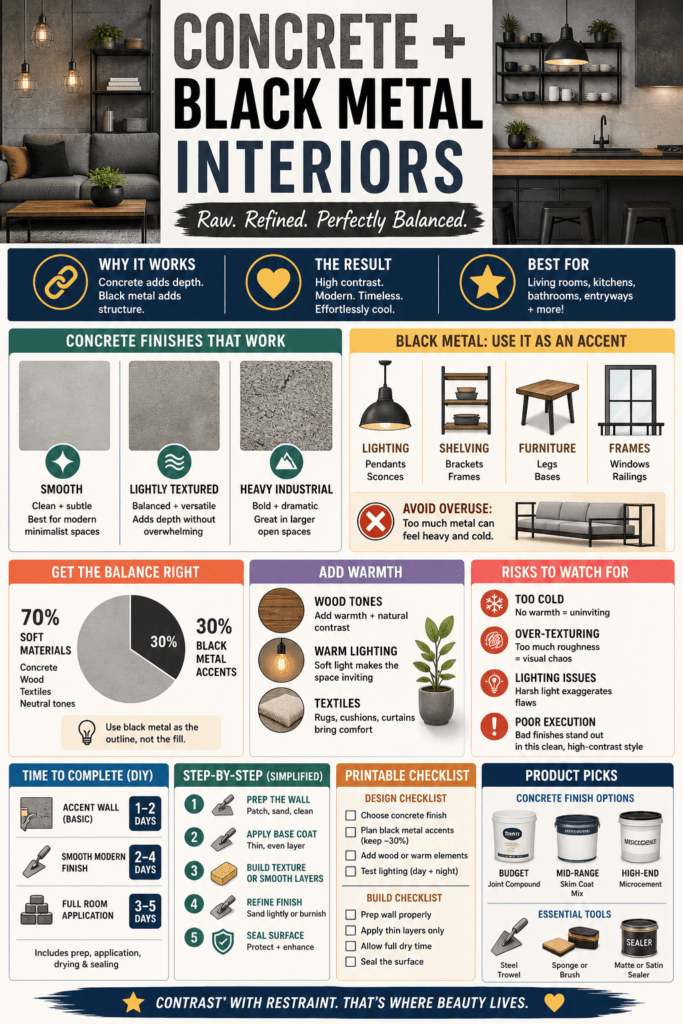
But here’s the catch: it’s easy to overdo it. Too much concrete and the room feels cold. Too much black metal and it starts looking heavy or industrial in a bad way. The balance is where the design actually comes together.
What “Concrete + Black Metal” Really Means
This style isn’t just throwing in a gray wall and a few metal chairs. It’s about layering materials that play off each other.
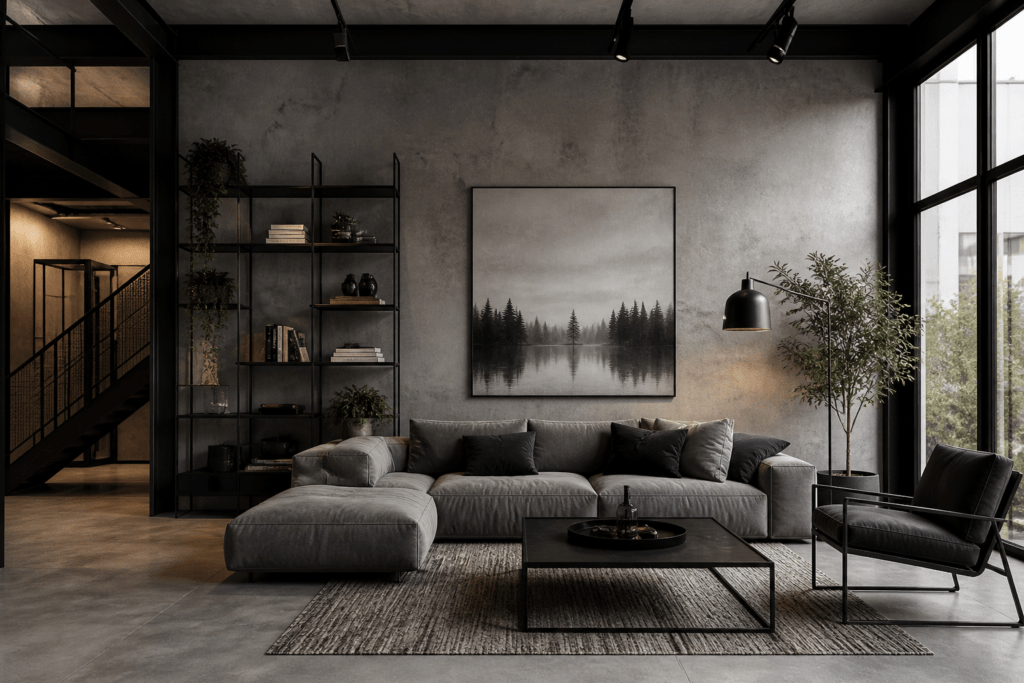
Core Elements:
- Concrete surfaces (walls, fireplaces, backsplashes, accent panels)
- Black metal accents (lighting, shelving, frames, furniture legs)
- Neutral palette (grays, whites, warm woods to soften the look)
Where You See It Most:
- Modern industrial living rooms
- Kitchens with open shelving
- Bathrooms with matte black fixtures
- Entryways with statement lighting
Concrete Finishes That Work Best
Not all concrete finishes pair well with black metal. The finish you choose changes the entire feel.
1. Smooth / Modern Concrete
- Clean, subtle, refined
- Works best with minimalist black metal fixtures
- Ideal for kitchens and bathrooms
2. Lightly Textured Concrete
- Adds depth without overpowering
- Great balance for most homes
- Works with both modern and industrial metal
3. Heavy Industrial Texture
- Rough, bold, high contrast
- Best in larger spaces
- Needs careful balance to avoid feeling too harsh
👉 For a deeper breakdown:
https://www.concretewalldesigns.com/smooth-vs-textured-concrete-finish/
Black Metal: Where to Use It (Without Overloading the Space)
The mistake I see most is treating black metal like a dominant material instead of an accent.
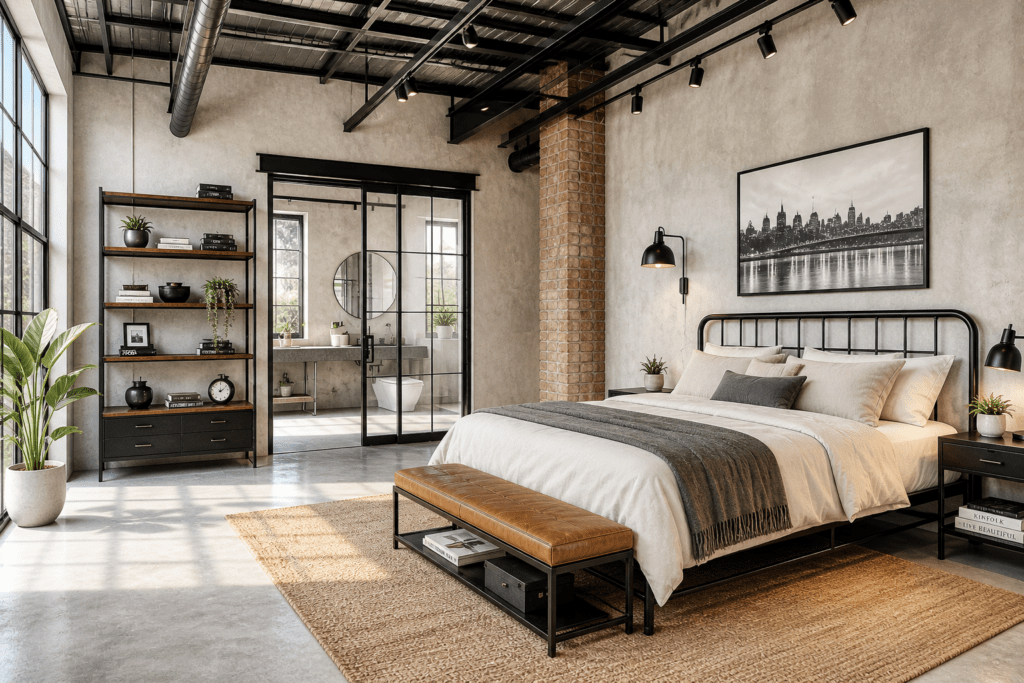
Use black metal in:
- Light fixtures (pendants, sconces)
- Shelf brackets and frames
- Furniture legs or table bases
- Window frames or railings
Avoid overusing it on:
- Large furniture pieces (can feel bulky)
- Entire wall systems (too heavy visually)
Think of black metal as the outline, not the fill.
Decision Guidance: Getting the Balance Right
If you want this look to feel elevated instead of cold, use this simple ratio:
👉 70% soft materials (concrete + wood + textiles)
👉 30% black metal accents
Add warmth with:
- Wood tones (oak, walnut)
- Soft lighting (warm bulbs)
- Textiles (rugs, cushions, curtains)
If your space already feels cool (north-facing, lots of gray), lean more toward smooth concrete and minimal metal.
Trade-Offs and Risks
What works in photos vs real life:
Risk #1: Too cold or sterile
Concrete + black metal can feel uninviting if there’s no warmth layered in.
Risk #2: Over-texturing
Too much rough concrete + black metal = visual overload
Risk #3: Lighting issues
Concrete surfaces react heavily to lighting—harsh light can exaggerate flaws
Risk #4: Poor execution
A bad faux concrete wall stands out more in this style because everything around it is clean and structured
👉 Proper prep is critical:
https://www.concretewalldesigns.com/faux-concrete-wall-prep/
Realistic Expectations
- Concrete finishes will always have variation—that’s part of the appeal
- Black metal will show dust and fingerprints more than lighter finishes
- This style looks best when not everything matches perfectly
- Faux concrete can look incredibly real—but only with layered application
👉 If you’re choosing materials:
https://www.concretewalldesigns.com/best-faux-concrete-wall-materials/
Time to Complete (DIY Concrete Wall)
| Project Type | Time |
|---|---|
| Accent wall (basic) | 1–2 days |
| Smooth modern finish | 2–4 days |
| Full room application | 3–5 days |
(Includes prep, application, drying, and sealing)
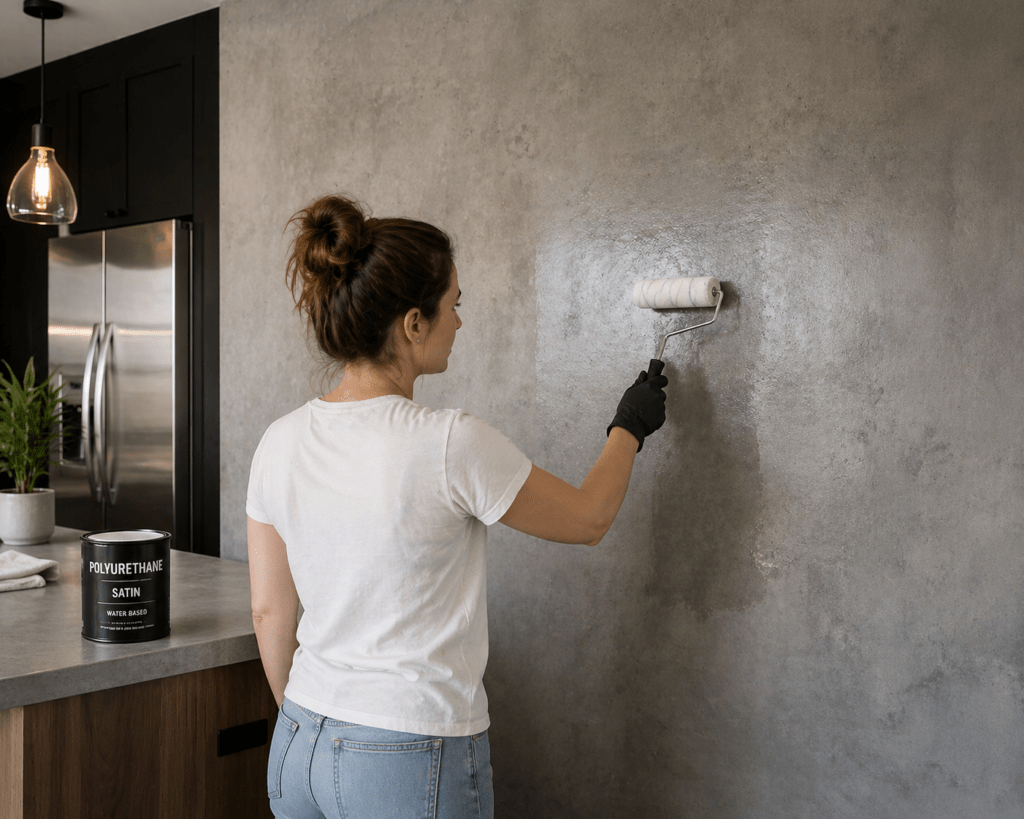
Step-by-Step Approach
- Prep the wall (patch, sand, clean)
- Apply base coat (thin layer)
- Build texture or smooth layers
- Refine finish (light sanding or burnishing)
- Seal for durability
👉 Full walkthrough:
How to DIY Your Own Concrete Wall
Product Recommendations
- Budget option: Joint compound (easy, forgiving)
- Mid-range: Skim coat mixes
- High-end: Microcement (best for modern look)
Pair with:
- Matte or satin sealer
- Steel trowel (for smoother finishes)
- Sponge or brush (for texture)
Printable Checklist

Design Checklist
- ☐ Choose concrete finish (smooth vs textured)
- ☐ Plan black metal accents (limit to ~30%)
- ☐ Add wood or warm elements
- ☐ Test lighting (day + night)
Build Checklist
- ☐ Prep wall properly
- ☐ Apply thin layers only
- ☐ Allow full dry time between coats
- ☐ Seal the surface
Frequently Asked Questions
Does this style work in small spaces?
Yes—but stick with smooth concrete and minimal metal. Heavy textures can overwhelm smaller rooms.
Is faux concrete durable enough for kitchens or bathrooms?
Yes, if sealed properly. Use a high-quality sealer to prevent moisture and staining.
What color metal works best besides black?
Dark bronze or gunmetal can soften the look while keeping the same style direction.
Can I mix this style with other design themes?
Absolutely. It blends well with:
- Scandinavian (adds warmth)
- Minimalist (keeps it clean)
- Rustic (adds contrast)
Conclusion: It’s All About Balance, Not Just Materials
Concrete and black metal is one of the most versatile combinations you can use—but only if you respect the balance. If you lean too hard into one side, it falls apart:
- Too much concrete → cold and flat
- Too much metal → heavy and harsh
The goal is contrast with restraint. Get that right, and the space feels modern, grounded, and intentionally designed—not like you copied a trend.
Take your time with the finish, layer materials thoughtfully, and always test a small section first. That’s how you end up with a space that actually feels as good as it looks.