
If you’re chasing that clean, modern concrete look, you’ve probably hit the same fork in the road most people do: Do I go all-in with real concrete, or fake it with a finish that looks just as good? I’ve worked through both approaches in real spaces—kitchens, living rooms, even small accent walls—and here’s the honest truth: most people don’t actually need real concrete to get the look they want.
But that doesn’t mean faux is always the better choice either.
Let’s break this down in a way that actually helps you decide—not just what’s cheaper, but what will hold up, look right, and fit your space long term.
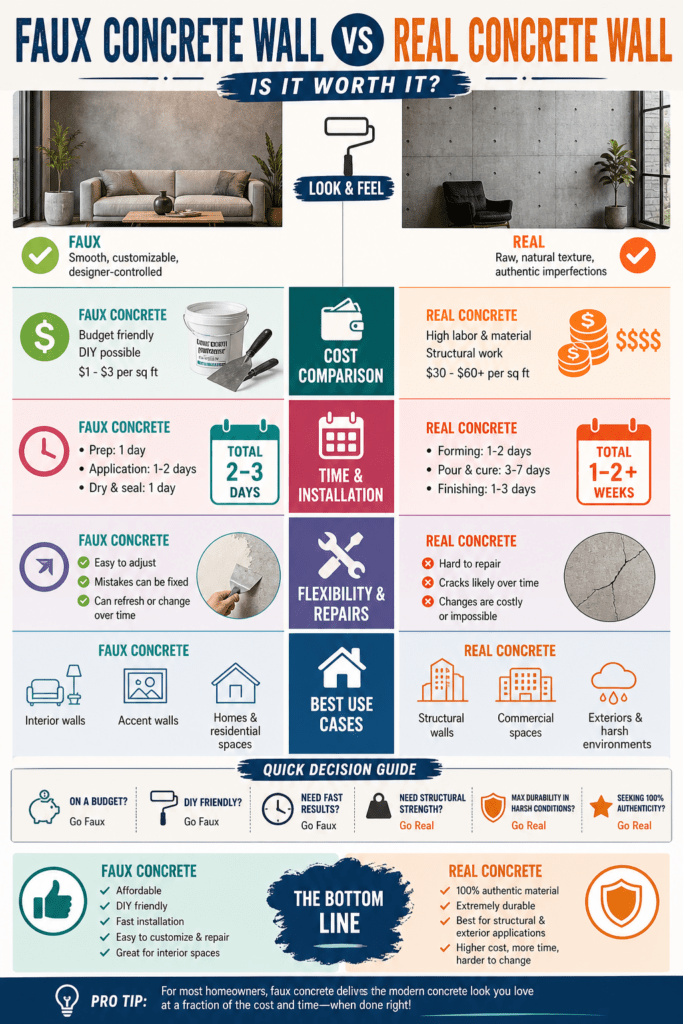
The Core Difference (That Actually Matters)
Real concrete is structural. It’s heavy, permanent, and unforgiving. Faux concrete is a surface treatment—usually joint compound, microcement, or plaster—applied over drywall or another base.
That difference affects everything:
- Cost
- Installation difficulty
- Longevity
- Repairability
- And surprisingly… realism
Cost Breakdown: Faux vs Real Concrete
Faux Concrete Wall
- Materials: $30–$150
- Tools: $20–$100 (if you don’t already have them)
- Labor (DIY): Free
- Labor (Pro): $5–$15 per sq ft
- Total DIY Cost: ~$1–$3 per sq ft
Real Concrete Wall
- Materials: $8–$15 per sq ft
- Formwork + Reinforcement: $5–$10 per sq ft
- Labor: $15–$30+ per sq ft
- Total Installed Cost: ~$30–$60+ per sq ft
👉 Reality check: Real concrete can easily cost 10–20x more than a DIY faux finish.
Where Faux Concrete Wins (And Why Most People Choose It)
1. You Get 90% of the Look for 10% of the Cost
With the right layering and color variation, faux finishes can look incredibly convincing—especially at normal viewing distances. Most guests won’t know the difference unless they touch it.
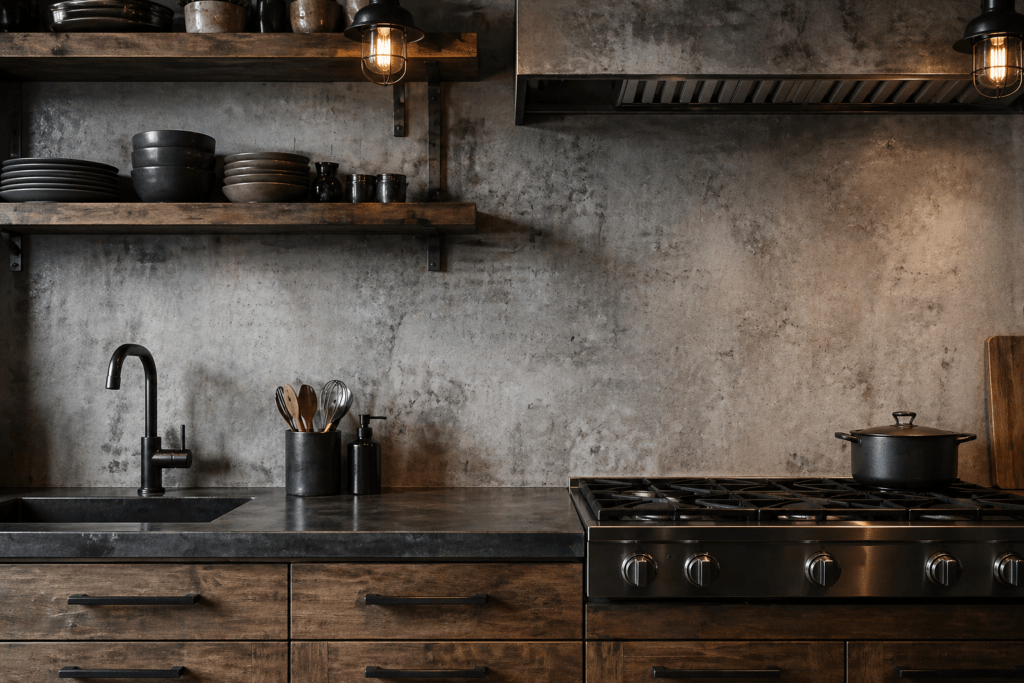
If you’re working on:
- Living rooms
- Bedrooms
- Accent walls
Faux is usually the smarter move.
2. It’s Actually DIY-Friendly
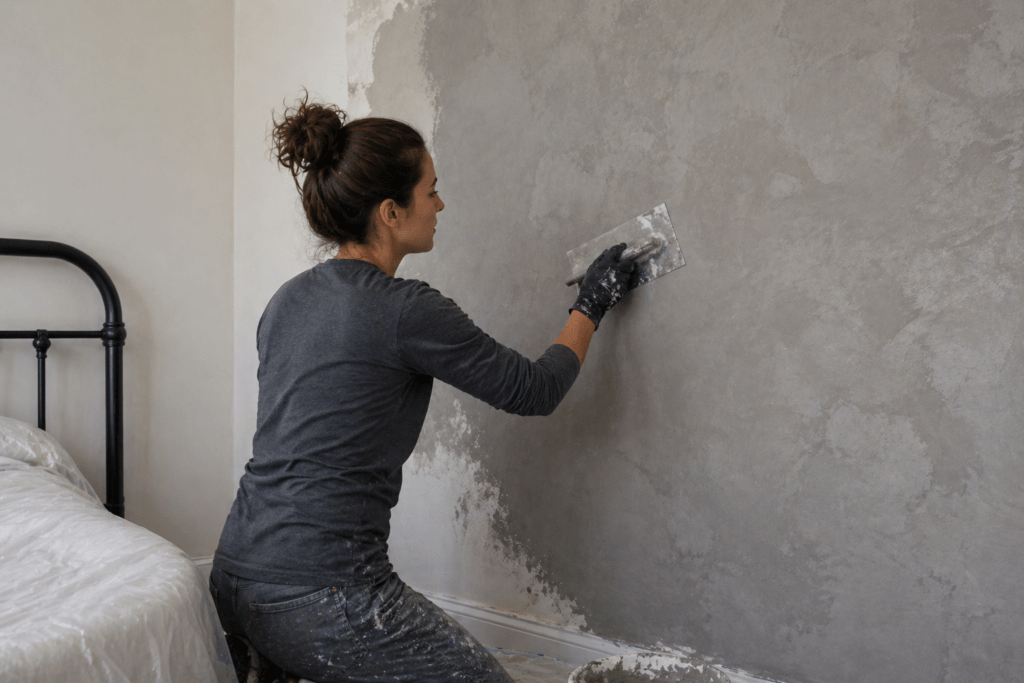
You don’t need forms, rebar, or a crew. A typical setup involves:
- Joint compound or microcement
- Trowel or drywall knife
- Sanding + sealing
If you want a full walkthrough, this guide helps:
👉 https://www.concretewalldesigns.com/faux-concrete-wall-joint-compound/
3. You Can Fix Mistakes
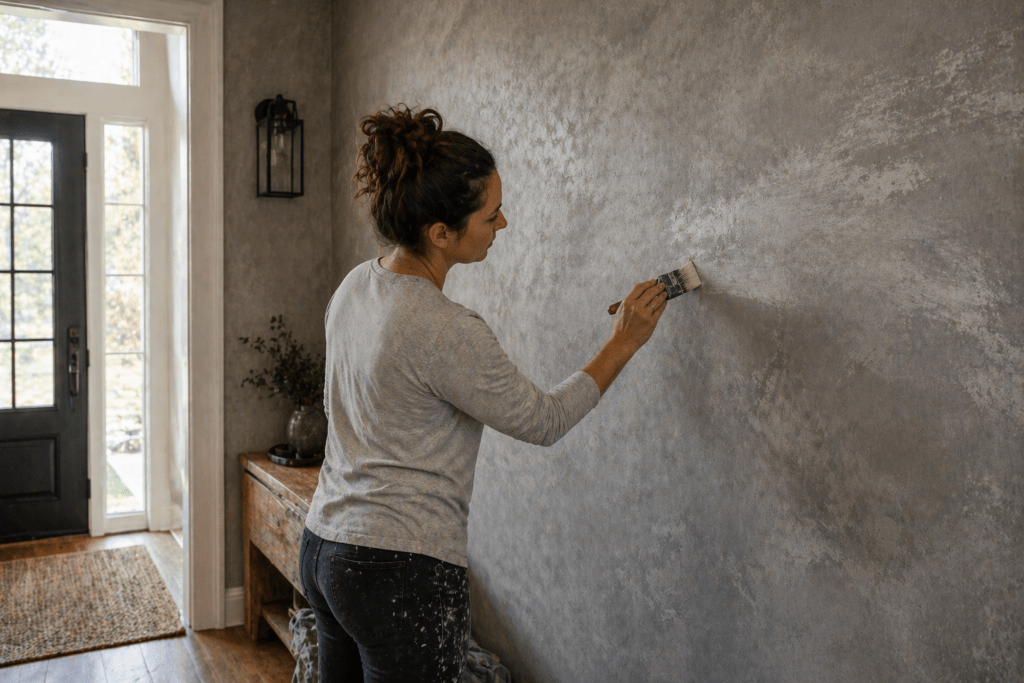
This is a big one people underestimate.
With faux finishes:
- Too dark? Lighten it
- Too smooth? Add texture
- Messed up a section? Rework it
With real concrete… you’re stuck.
4. It Works on Existing Walls
No structural changes, permits, or engineering concerns.
You can apply it over:
- Drywall
- Cement board
- Painted surfaces (with proper prep)
Where Real Concrete Still Wins
Let’s be fair—real concrete does have its place.
1. Authentic Texture and Depth
There’s a density and variation that’s hard to fully replicate. In high-end minimalist homes or architectural builds, that authenticity matters.
2. Durability in Harsh Environments
For:
- Exterior walls
- Commercial spaces
- High-impact areas
Real concrete will outlast most faux finishes.
3. No “Surface Layer” Feel
Faux finishes are coatings. Real concrete is the structure itself. That difference shows up in:
- Edge transitions
- Corners
- Thickness
Trade-Offs and Risks You Shouldn’t Ignore
Faux Concrete Risks
- Can look fake if rushed (biggest issue)
- Requires sealing for durability
- Texture inconsistency if technique varies
- Not ideal for wet zones unless properly sealed
If you want to avoid the “painted gray wall” look, this is worth reading:
👉 https://www.concretewalldesigns.com/why-faux-concrete-looks-like-paint/
Real Concrete Risks
- Extremely expensive mistakes
- Cracking over time (it will happen)
- Long install timeline
- Requires structural planning
Realistic Expectations (This Is Where People Get It Wrong)
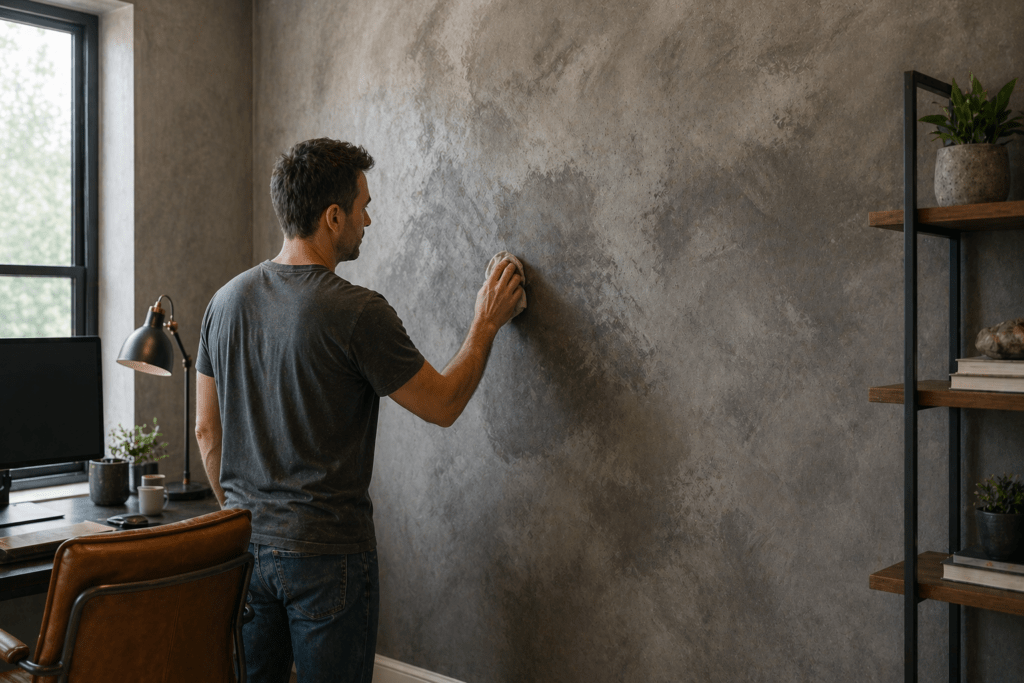
Here’s the honest take:
- Faux concrete can look amazing—but only if you build depth with multiple passes
- Real concrete isn’t automatically beautiful—it often needs finishing or polishing
- Lighting matters more than material in many cases
If you rush faux, it looks like paint.
If you overdo real, it can look cold and industrial in a bad way.
Time to Complete
Faux Concrete (DIY)
- Prep: 2–4 hours
- Application: 4–8 hours (spread over 1–2 days)
- Drying + sealing: 24–48 hours
- Total: 2–3 days
Real Concrete
- Forming: 1–2 days
- Pour + cure: 3–7 days
- Finishing: 1–3 days
- Total: 1–2+ weeks
Product Recommendations (That Actually Work)
For most DIY projects:
- Joint Compound (Budget Option)
Easy to work with, great for beginners - Microcement (Premium Option)
Better durability and water resistance - Sealer (Matte or Satin Polyurethane)
Critical for longevity and cleanability
If you’re comparing materials more deeply:
👉 https://www.concretewalldesigns.com/best-faux-concrete-wall-materials/
Printable Checklist

Before You Decide:
- Is this wall structural or decorative?
- What’s your budget per square foot?
- Do you want DIY or hire out?
- Is the area high-moisture or high-impact?
- Do you care about 100% authenticity or visual impact?
If Choosing Faux:
- Proper surface prep completed
- Multiple thin layers planned
- Color variation strategy decided
- Sealer selected
If Choosing Real Concrete:
- Structural requirements reviewed
- Budget confirmed (including labor)
- Timeline realistic
- Crack expectations understood
Frequently Asked Questions
Does faux concrete look cheap?
It can—but only if it’s done in one flat coat. Layering and color variation make all the difference.
Can faux concrete be used in a kitchen?
Yes, but seal it properly. A satin or matte polyurethane works well for backsplashes.
Is microcement better than joint compound?
For durability and moisture resistance—yes. For cost and ease—joint compound wins.
Does real concrete crack?
Yes. All concrete cracks over time. The question is how visible it becomes.
Can I apply faux concrete over painted walls?
Yes, as long as the surface is clean and lightly sanded for adhesion.
Conclusion
If your goal is a modern, concrete-style aesthetic in a home setting, faux concrete is usually the smarter, more flexible choice. It’s dramatically cheaper, easier to work with, and forgiving when things don’t go perfectly.
Real concrete makes sense when you’re building from scratch, need structural strength, or want absolute authenticity—just go in knowing you’re committing to the cost and permanence.
Most people don’t regret choosing faux.
They regret rushing it.
Take your time, build the layers, and you’ll get a result that looks far more expensive than it actually was.
More Resources
- American Concrete Institute – https://www.concrete.org
- National Association of Home Builders – https://www.nahb.org
- International Code Council – https://www.iccsafe.org