
Faux concrete walls look incredible when they’re fresh—but cleaning them the wrong way is one of the fastest ways to ruin that natural, matte finish you worked so hard to create.
I’ve seen it happen more than once: someone treats the wall like regular painted drywall, scrubs it down with a household cleaner, and suddenly the surface looks blotchy, shiny, or worn out in patches. That’s because faux concrete isn’t just paint—it’s a layered, textured finish that needs a different approach.
The good news is cleaning it is actually simple once you understand what you’re working with. Let’s walk through how to do it right.
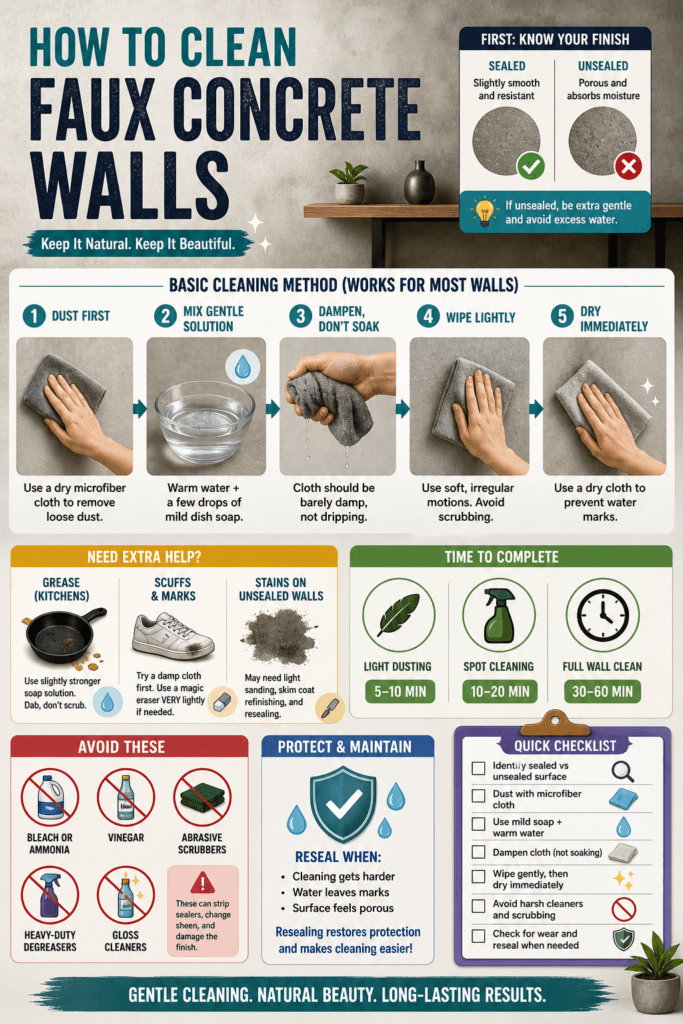
First: Know What Type of Finish You Have
Before you clean anything, you need to identify your surface:
- Sealed faux concrete (matte or satin sealer)
→ More durable, easier to clean - Unsealed (raw joint compound, plaster, or microcement)
→ More fragile, absorbs moisture
If you’re not sure, lightly touch the surface:
- Slightly resistant + smooth feel = sealed
- Chalky or porous feel = unsealed
👉 If your wall isn’t sealed, it’s worth reviewing:
Cleaning an unsealed wall aggressively is a risk—more on that below.
The Biggest Mistake: Overcleaning
Here’s the reality most people miss:
Faux concrete is supposed to have variation.
If you try to make it look perfectly clean and uniform, you’ll actually make it look worse—more like paint and less like concrete.
So the goal isn’t “spotless.”
The goal is clean without flattening the character.
Basic Cleaning Method (Works for Most Walls)
What you need:
- Microfiber cloth
- Soft sponge
- Warm water
- Mild dish soap (a few drops only)
Step-by-step:
- Dust first (don’t skip this)
Use a dry microfiber cloth to remove loose dust.
Skipping this step = you grind dirt into the finish. - Mix a gentle cleaning solution
- Warm water
- A tiny amount of dish soap
- Dampen, don’t soak
Your cloth should be barely damp—not dripping. - Wipe lightly
Use soft, irregular motions. Avoid scrubbing in circles like you would on tile. - Dry immediately
Use a dry cloth to prevent water marks.
Time to Complete
| Task | Time |
|---|---|
| Light dusting | 5–10 minutes |
| Spot cleaning | 10–20 minutes |
| Full wall clean | 30–60 minutes |
This is a quick maintenance task—not a deep-cleaning project.
When You Need More Than Basic Cleaning
For grease (kitchens)
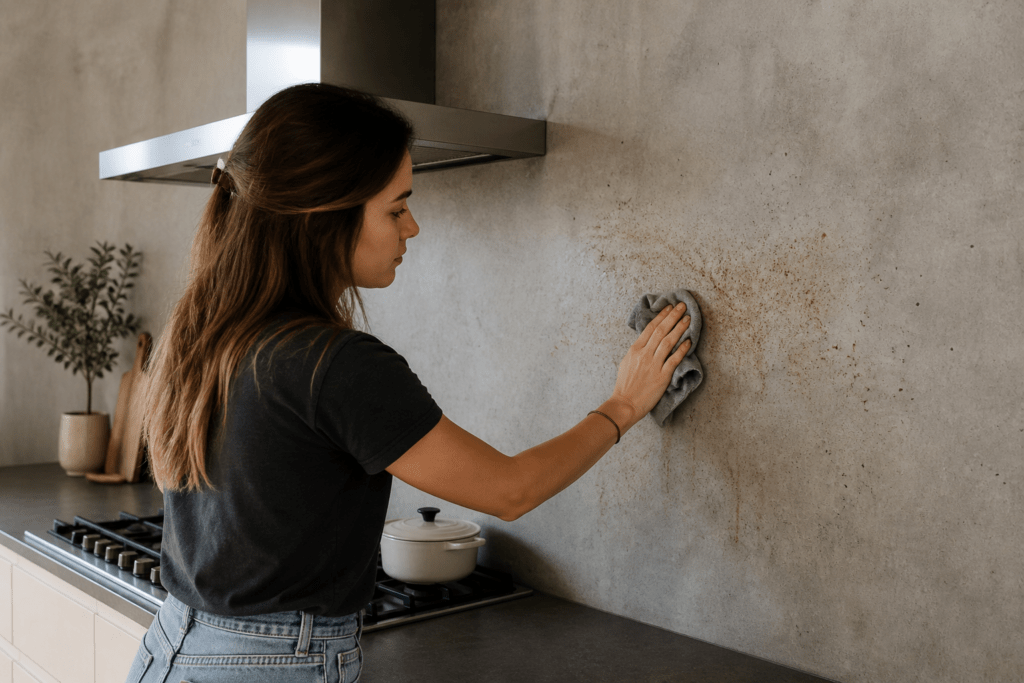
- Use slightly stronger dish soap dilution
- Dab instead of scrub
- Repeat gently instead of applying pressure
If grease is stubborn, that’s often a sign the wall needs a better sealer.
For scuffs or marks
- Try a damp microfiber cloth first
- If needed, use a magic eraser VERY lightly
⚠️ Risk: Magic erasers are abrasive. Overuse can create shiny spots.
For stains on unsealed walls
This is where things get tricky.
Unsealed surfaces can absorb stains permanently. Your options:
- Lightly sand and reblend the area
- Apply a thin skim coat to refresh
- Seal afterward to prevent future issues
👉 If you’re repairing or refreshing:
Cleaning Products to Avoid (Important)
Avoid these completely:
- Bleach or ammonia
- Vinegar (too acidic for some finishes)
- Abrasive scrubbers
- Heavy-duty degreasers
- Gloss-enhancing cleaners
These can:
- Strip sealers
- Change sheen (creating shiny patches)
- Break down the layered finish
Trade-Offs and Realistic Expectations
Let’s be straightforward—faux concrete walls are not “wipe-anything-off” surfaces like tile or laminate.
Trade-offs:
- ✔ Beautiful, natural look
- ✔ Unique variation
- ✖ Slightly more delicate
- ✖ Requires gentle cleaning
If you want a surface that handles heavy cleaning easily, you’ll need:
- A stronger sealer
- Or a slightly higher sheen finish
That’s always the trade-off:
More durability = slightly less natural look
When It’s Time to Reseal
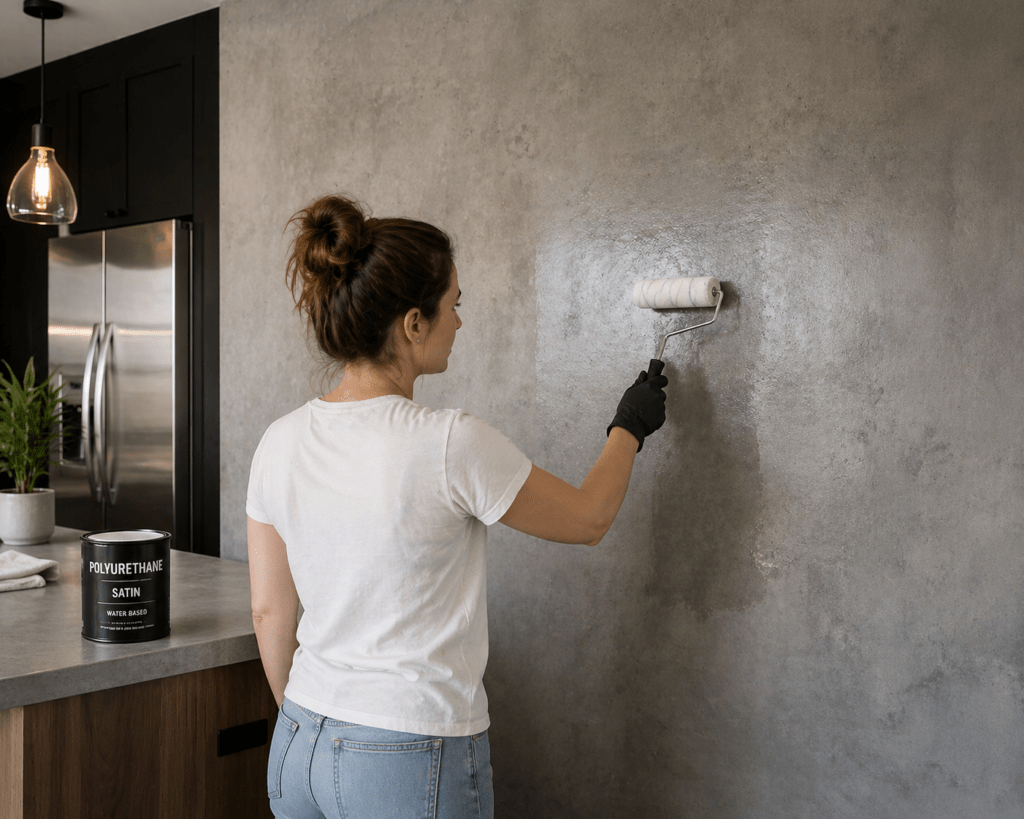
If you notice:
- Cleaning is getting harder
- Water leaves marks
- Surface feels more porous
…it’s time to reseal.
Resealing:
- Restores protection
- Makes cleaning easier
- Keeps the finish consistent
👉 See options here:
Product Recommendations That Work Well
For maintenance cleaning:
- Basic dish soap (Dawn or similar)
- Microfiber cloths (lint-free)
- Soft sponges
To protect:
- Matte or satin polyurethane (water-based)
- Penetrating sealers for a natural look
For repairs:
- Joint compound (small touch-ups)
- Microcement skim coat for refinishing
👉 Full DIY system:
Printable Checklist: Cleaning Faux Concrete Walls

Before cleaning:
- Identify sealed vs unsealed surface
- Dust wall with microfiber cloth
Cleaning process:
- Use mild soap + warm water
- Dampen cloth (not soaking)
- Wipe gently (no scrubbing)
- Dry immediately
Spot issues:
- Dab grease (don’t scrub)
- Use magic eraser lightly if needed
- Avoid harsh cleaners
Maintenance:
- Check for signs of wear
- Reseal if surface becomes porous
Frequently Asked Questions
Can I use all-purpose cleaner on faux concrete walls?
No. Most all-purpose cleaners are too strong and can damage the finish or change the sheen.
How often should I clean faux concrete walls?
Light dusting monthly, deeper cleaning only when needed. Overcleaning can wear the finish.
Why do I get streaks after cleaning?
Usually too much water or not drying the surface quickly enough.
Can I pressure wash faux concrete walls?
Indoors—absolutely not. Outdoors—only if it’s a properly sealed, exterior-rated surface, and even then, low pressure.
What’s the safest way to remove stains?
Start with a damp microfiber cloth. If that fails, consider light refinishing instead of aggressive cleaning.
Conclusion
Cleaning faux concrete walls isn’t about scrubbing harder—it’s about working smarter.
Once you shift your mindset from “clean like paint” to “preserve a textured finish,” everything changes. Gentle cleaning, minimal moisture, and the right expectations will keep your wall looking natural and consistent for years.
And if you ever feel like cleaning is becoming difficult, that’s usually not a cleaning issue—it’s a sign your wall needs better protection.